
Sports Leadership Programme
Making an impact on society by shaping leaders in sports

Start
Kick-off – 4 Febr. 2027
Module 1 – 1 & 2 March 2027
Module 2 – 6 & 7 April 2027
Module 3 – 18 & 19 May 2027
Module 4 – 29 & 30 June 2027
Participants
Executives in sports, education and business
Duration
6 months
4 modules of 2 days
Fees
€ 8.900,- ex. VAT
Sports Leadership Programme 10 (SLP10) – Applications Now Open
We are proud to announce the upcoming Sports Leadership Programme 10 (SLP10), commencing in February 2027. Building on the continued success of previous editions, SLP10 will once again bring together a curated group of ambitious leaders from across the worlds of sport, business, and education.
The Sports Leadership Programme is a high-level, international executive programme designed to develop impactful leadership within the dynamic and rapidly evolving sports ecosystem. Participants will engage in an intensive, modular journey focused on high performance, governance, social impact, and the business of sport, complemented by a strong personal leadership development track.
Due to the selective nature of the programme and limited cohort size, interested candidates are encouraged to apply early. This is a unique opportunity to join a network of forward-thinking professionals committed to shaping the future of sport through leadership, innovation, and collaboration.
Join us in February 2027 and take the next step in your leadership journey.
Admission for 2027 is open! SLP-10 starts February 2027.
About the Sports Leadership Programme
The Sports Leadership Programme (SLP) is a high-end international executive programme, specifically designed to guide you – as a leader in a professional sports environment – to realize your goals and ambitions. This unique programme provides an in-depth knowledge on the fast-emerging world of sports management and leadership. We will use a holistic and leadership approach to analyze the so called “sports ecosystem” and the indispensable underlying values of integrity, credibility and sustainability. Passionate sports leaders will come together to make sustainable improvements to the world of elite sports in an innovative way.
During this practical and personalized development journey you will further discover your strengths and develop them to reach their full capacity, while learning from inspirational faculty and the experiences of your fellow students. In combination with the personal development track, the programme enables a steep learning curve. Joining the SLP, is joining a community of inspiring people who together leave their mark upon this world.
Modular schedule
Renowned professors & experts
Module at Loughborough University (London)
Curated group of participants – no open admission
International academic network
Become part of unique SLP alumni network
How Siem de Jong experienced the programme
“I was able to immediately apply learnings from the SLP in my daily career at AJAX”
Siem de Jong
Professional soccer player
Course outline and details
The SLP consists of four modules that each take up two days and together with the personal leadership track combining a total course load of nine days, spread over six months. The personal leadership track is woven throughout the entire program. The modules will take place at a variety of inspiring locations to enrich your learning experience. We stay on location during each module. Hotel stays are included in the tuition fee.
Module 1 | High Performance Sports
This module fosters a deeper understanding of the specific attributes that contribute to the high performance success output of federations, professional clubs, teams or sports organisations. Was it just magic or can you manage and control the essential performance attributes to get improved control over outcomes?
In this module we will learn how science and technology have changed the way we train and how this has impacted the entire organisation. How is performance evaluated in the laboratory and in the field, what can best predict performance and should it be monitored? The performance level obviously depends on training quality and quantity, but is also influenced by (optimal) nutrition and adapted recovery. Otherwise excessive fatigue can occur. Balancing and fine-tuning of all these elements is crucial for optimal performance.
How to manage high performance sports environments? In this module, participants are faced with the complexity of performance, governance and health. Does the boardroom understand the requirements of the field?
Module 2 | Sports & Social Impact
Sport has increased in popularity and societal significance during the last decades. Sport is viewed as an integral part of daily life of individuals, municipalities, and the country itself, and has become part of other domains such as economics, education, health and law, and is frequently presented by politicians and policy makers as a solution to many current societal problems. In the dominant discourse of (sports) policy makers, sport is not so much valued for its own sake, but rather for its potential to cure or prevent social ills, and sports organizations are expected, and sometimes forced, to contribute actively to this. At their turn, sport organizations often emphasize their social impact or claim to be able to contribute to the solutions of various social issues.
This means that sport organization are increasingly publicly assessed on their contribution to the public sphere, such as a healthier and more inclusive society. It can be argued that traditional sport organizations have historically supported social issues, but there is ever increasing pressure and expectations for sport organizations to act socially responsible, by generating a positive impact on citizens, communities, the environment, and broader society. We also see mega sporting events still being used as a mechanism to achieve societal, environmental and community outcomes, as a benefit of hosting such events. Through the case of London 2012, this will be explored in relation to the legacy promised made, related to urban regeneration and sport participation.
This contribution made by sport organizations or events to the good of society can be described as ‘social impact’. Social impact is a broad term which covers a range of priority areas in national contexts and international fields, but broadly it is the idea positive impacts on society can be created through different mechanisms, and in this case, sport can be the vehicle. The connected term of Sport for Development (SfD) refers to the intentional use of sport as a mechanism to achieve nonsport development goals. Actors and stakeholders in sport, academia, the private sector, non-profit and non-governmental organisations, government agencies and international organisations, among others, look to use sport’s potential as a tool to serve personal, community, national, and international development objectives. A critical component of the SfD movement centres on utilising sport to achieve the 2017 Sustainable Development Goals (SDGs), which outline the 17 priority areas such as peace and security, reducing inequalities, health, and education. Such goals provide leveraging opportunities and the legitimisation of sport beyond its traditional spaces. Sport organizations can embed such socially driven agendas into their strategy, and this has become commonplace, as sports leaders have recognised and leveraged the opportunity and power of sport to offer more than just the sporting pursuit itself.
For the purpose of this social impact module, the focus will be on sustainability, Mega Sports Events and the associated legacy and communities, in addition to this innovation will be applied as a key concept which will be explored throughout the module.
Module 3 | Sports Finance & Governance
Success on the field starts in the boardroom. Leading sports organizations not only need to play by the rules, they also need to be the models of effective governance; legislation and financial control. Much like a coach develops a training plan and goals for a team, governance helps set the purpose for an organization, its vision and how it will get there. For a game plan to be effective, it is important to know the objective, the rules, and how the team is accountable for its results.
Welcome to the Sports Governance Course, a comprehensive exploration of the vital principles and practices that underpin the effective management and oversight of sports organizations. In an era where sports play an increasingly prominent role in society, the need for robust governance structures has never been more critical. This course aims to provide participants with a nuanced understanding of the multifaceted nature of sports governance, delving into key concepts and strategies that contribute to the ethical and transparent functioning of sports entities.
The course will commence with an exploration of the historical evolution of sports governance, providing insights into how governing bodies have adapted to the changing landscape of sports. Participants will gain a contextual understanding of the challenges and opportunities that have shaped the current state of sports governance globally. We will talk about how ethics, leadership and culture are all an integral part of modern governance.
Moving forward, we will delve into the core principles that form the foundation of effective sports governance, connecting these principles with the crucial aspect of finance. Participants will explore the financial dimensions of sports governance, understanding the impact of financial decisions on the sustainability and success of sports organizations. Topics will include budgeting, financial reporting, sponsorship agreements, and the financial implications of governance decisions.
Real-world case studies will be employed to illustrate the interconnected nature of sports governance and finance, offering participants practical insights into managing financial responsibilities within the broader context of governance.
In conclusion, the Sports Governance Course aims to equip participants with the knowledge and skills necessary to navigate the intricate landscape of sports governance, with a specific focus on its interconnection with leadership and finance. By fostering an understanding of the ethical, legal, organizational, and financial aspects of sports management, this course endeavors to empower individuals to contribute to the responsible and sustainable development of sports organizations, ensuring they thrive in an environment characterized by integrity, accountability, transparency, and financial prudence.
Module 4 | Sports & Business
Participants will be guided through the various stages of the evolution of organised sports that ultimately led to the formation of a full-fledged industry. With the assistance of various guest lecturers from the business sector and universities, various commercial themes will be addressed, with particular attention to the motivations and behaviour of sports consumers, as well as strategies for engaging diverse groups and cultures.
An analysis of the impact of technology on the sports industry and how it integrates into media entertainment brings us into the current era of (de?)globalisation – that of the digital revolution. By reflecting on the role of digital technology in sports and sports marketing in particular, participants are enabled to critically evaluate how sports commerce now and, in the future, will contribute to social cohesion and disruption, to economic growth and economic exclusion, and how sports business is an arena of growing (controversial) political influence. The unit will conclude with an assignment to conceive and pitch an innovative sports business product to potential investors (the sport business dragon’s den).
In this course, we’ll explore the intricacies of sports business, from understanding value creation to navigating geopolitical influences. We’ll decode the worth of media rights and master strategies for maximising sponsorship returns. Additionally, we’ll delve into digital marketing and AI, equipping participants with insights to dominate in the modern sports marketing landscape. Through theory, case studies, and practical exercises, participants will gain the skills needed to thrive in global sport business environments.
Focus on personal leadership
Your personal development is an essential part of becoming a better leader! Therefore, personal leadership development is a core component of this entire program. Besides the specific course topics, each module incorporates elements to improve your personal leadership skills. In addition, you will also have both individual personal leadership sessions and group coaching sessions. These activities will help you create a practical, personalised development journey, and reach new insights into your personal and professional behaviour. This demanding but insightful development process will prepare you for all your future leadership roles.

More about the Personal Leadership Development Track
The Sports Leadership Programme (SLP) is an international executive programme designed for professionals operating in high-performance sport environments. It supports participants in strengthening their leadership capacity and guiding teams and organisations towards sustainable success. SLP adopts a holistic view of the sport ecosystem, with leadership as the connecting force between performance, governance, culture, and impact. Participants explore how leadership decisions influence not only results, but also people, culture, and the broader societal role of sport.
The programme is deliberately designed as a highly personalised leadership development journey. It is not only about acquiring knowledge, but about developing who you are as a leader and how you operate in complex sport contexts. Participants are encouraged to identify their authentic leadership profile, build on their strengths, and further develop the competencies required to lead effectively in demanding and dynamic environments. Learning takes place through interaction with international faculty, experienced practitioners, and peers from diverse sport backgrounds. The personal development journey is key in taking the next steps towards becoming a better leader and reaching your goals. Our professional coach will guide you on this journey, using various methods to help you gain insights in your professional and personal behavior enabling a steep learning curve. During the programme there will be multiple group-coaching sessions, challenging you to operate outside your comfort zone and discover new aspects of your character and help you develop into the leader you want to become.
Programme details
Module leader and Executive coach: Caroline Serré
Learning environment
Participating in the Sports Leadership Programme means beginning a self-discovery journey with like-minded in a unique learning environment. Self-discovery can take many different forms – from noticing how you react to something in your environment to uncovering your purpose in life. The greater your awareness of your inner world, the more your actions can align with the life you want to create. And the more impact you can make as a leader in a changing world.
The personal development journey is key in taking the next steps towards becoming a better leader and reaching your goals. Executive coach Caroline Serré (CIC Company) will guide you on this journey, using various methods to help you gain insights in your professional and personal behaviour enabling a steep learning curve. Working in small Intervision groups with a lot of opportunities for personalised learning is key in this programme. We aim to create a safe holding space for participants to feel free to share their challenges and support courageous and dynamic dialogues within the group.
The opinion of our alumni

Gregory Sedoc
EU champion 60m hurdles & Olympic athlete
“The SLP has helped me to have a clearer voice in ethical discussions in the sports field.”


Renate Roeleveld
General manager
“At SLP I was invited to look at myself and my work from a different perspective. That helped me boost my skills.”


Siem de Jong
Professional soccer player
“I was able to immediately apply learnings from the SLP in my daily career at AJAX.”

How Myron Walraven reflects on his experience in the Sports Leadership Programme
“Don’t become something, become someone.”
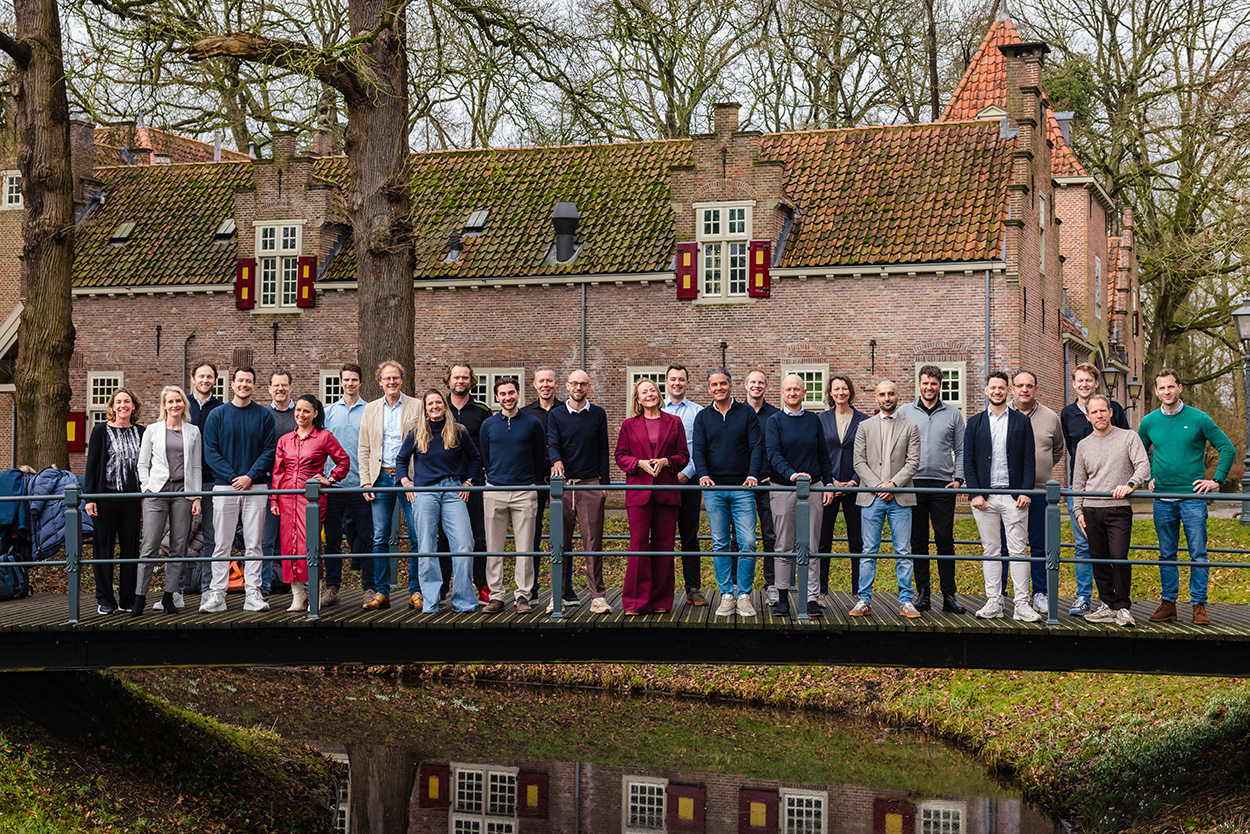
Overview of All SLP Alumni – Years 1 to 9


Who should attend?
The Sports Leadership Programme has been specifically designed for talented and ambitious sports coaches and managers, as well as entrepreneurs with a passion for sports. We feel diversity creates the ideal environment for growth. With this in mind, we aim to create a group of students from a variety of backgrounds and with a range of experiences and dreams.
Suitable candidates for this programme are: national team managers, Olympic coaches, top sports managers, business executives, technical managers, and entrepreneurs and sports managers that look to exchange ideas, knowledge and experiences.

Questions? Simone is there for you!
Have questions or want to learn more about the Sports Leadership Programme? Feel free to call or email us, we’d be happy to discuss how the SLP can support your professional journey.